Introduction
Education is more than just going to school and doing well in examinations. Students’ overall development depends significantly on the facilities and opportunities available in their colleges. These resources include libraries, faculty support, laboratories, career guidance services, placement cells, and extracurricular activities. However, many students fail to utilize these resources effectively.
Students studying at a best MBA college often benefit from industry-oriented learning environments, mentorship opportunities, and professional development programs that help them build successful careers.
Making the best use of college resources can improve academic performance, enhance practical skills, and prepare students for successful careers. All that is required is awareness of available opportunities and a willingness to use them wisely.
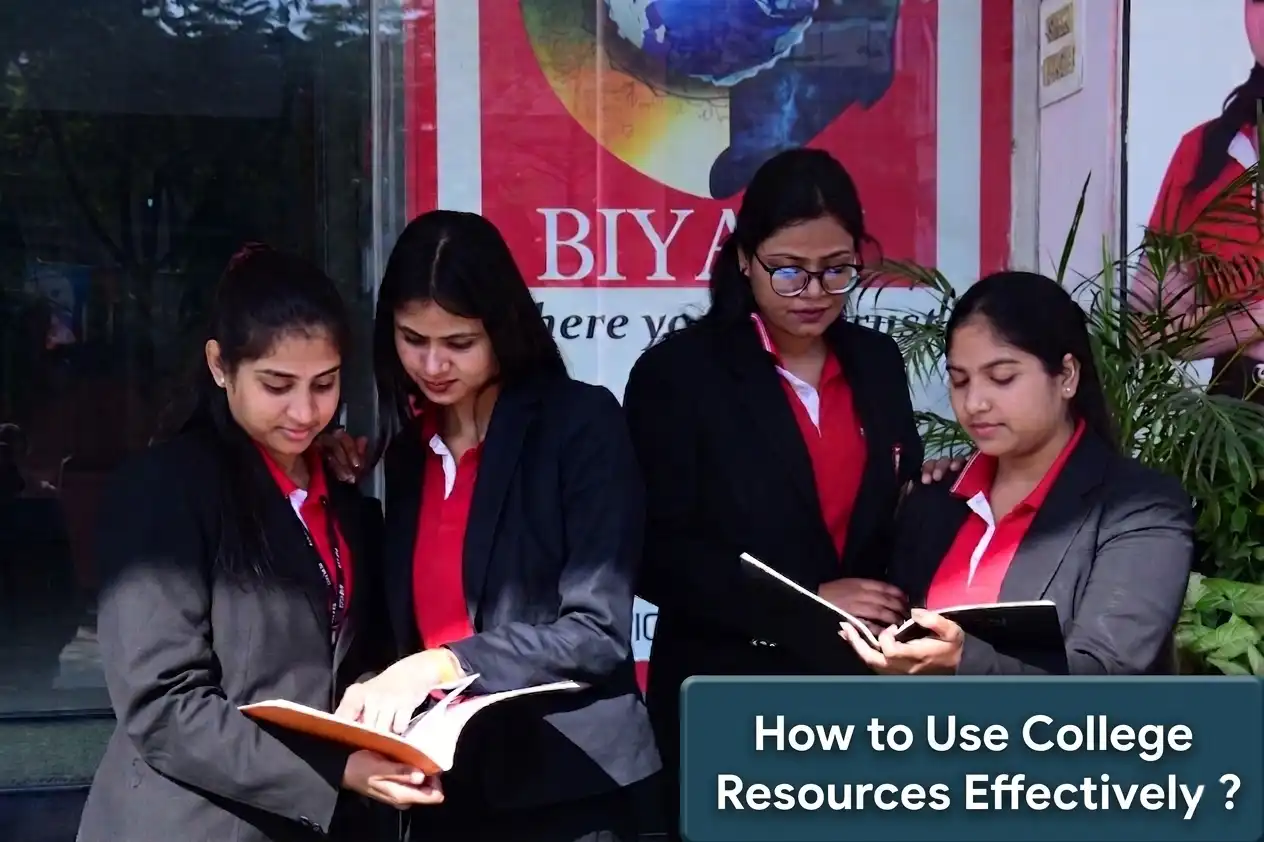
Importance of Using College Resources
College resources contribute to students’ academic, personal, and professional growth. Effective utilization of these resources helps students:
- Enhance academic knowledge and performance
- Acquire practical and industry-specific skills
- Increase self-confidence and communication skills
- Gain real-world experience
- Access career guidance and placement opportunities
Students who actively engage with available resources often stand out because of their broader knowledge and well-rounded personalities.
Academic Resources
Academic resources play a vital role in helping students achieve educational success.
Library Usage
The library is much more than a collection of books; it is a valuable source of knowledge and information. Students should:
- Explore reference books, journals, and research articles
- Use online libraries and e-books
- Develop a habit of reading beyond the prescribed syllabus
Example: A management student can gain deeper insights by referring to industry reports and academic journals instead of relying solely on classroom lectures.
Teachers’ Assistance
Faculty members are among the most valuable resources available in colleges.
- Seek clarification whenever you have doubts
- Consult teachers regarding projects, internships, and career planning
- Build positive relationships with faculty members
Students who maintain good relationships with teachers often receive valuable mentorship and career opportunities.
Laboratories and Practical Learning
For courses involving practical work, laboratories offer essential hands-on learning experiences.
- Use laboratories regularly for practical learning
- Experiment beyond assigned tasks
- Develop analytical and problem-solving skills
Practical exposure strengthens theoretical understanding and improves learning outcomes.
Digital and Technology Resources
Modern colleges provide numerous technological resources that support learning and skill development.
Online Portals and Educational Platforms
- Access study materials, recorded lectures, and assignments
- Utilize Learning Management Systems (LMS)
- Stay updated with notices and academic schedules
Computers and Software
- Learn industry-relevant software such as Excel, SPSS, and other specialized tools
- Prepare presentations and academic projects efficiently
- Develop technical skills required in the job market
Students proficient in digital tools often gain a competitive advantage during recruitment.
Career Development Resources
Many colleges offer career development services that students often overlook.
Placement Cell
- Participate in workshops, training sessions, and mock interviews
- Take part in campus recruitment drives
- Work on improving your resume and interview skills
Internships
- Explore internship opportunities through college networks
- Gain industry exposure and practical experience
- Build professional connections and networks
Example: MBA students who actively participate in placement cell activities are often more successful in securing quality job opportunities.
Co-Curricular and Extracurricular Activities
College education extends beyond academics and plays a crucial role in personal development.
Clubs and Societies
- Join clubs aligned with your interests
- Participate actively in competitions and events
- Develop leadership and teamwork skills
Lectures and Seminars
- Attend sessions by industry experts and successful professionals
- Learn about emerging industry trends
- Interact with professionals and expand your network
These activities help students broaden their perspectives and step outside their comfort zones.
Time Management and Resource Utilization
Effective use of college resources requires efficient time management.
- Create a structured daily schedule
- Allocate time for study, library visits, and extracurricular activities
- Avoid unnecessary distractions and time wastage
Example: A student who attends classes and regularly uses the library gains more knowledge than one who relies solely on lectures.
Peer Learning and Networking
Fellow students also serve as valuable learning resources.
Classroom Discussions
- Exchange ideas and knowledge with peers
- Collaborate on assignments and projects
- Enhance communication and teamwork skills
Networking
- Connect with senior students and alumni
- Learn from their experiences
- Seek guidance regarding career planning and higher education
Peer learning often simplifies complex concepts and improves overall understanding.
Common Mistakes to Avoid
Many students fail to benefit from college resources because of:
- Lack of awareness
- Poor time management
- Hesitation to seek guidance from teachers
- Overdependence on classroom lectures
- Ignoring extracurricular activities
Avoiding these mistakes can significantly enhance the college experience.
Practical Tips for Effective Use
To maximize the benefits of available resources, students should:
- Be proactive and curious
- Seek help whenever needed
- Learn beyond the syllabus
- Remain consistent in their efforts
- Maintain a balance between academics and extracurricular activities
Small but consistent efforts can produce remarkable long-term results.
Frequently Asked Questions (FAQs)
1. Why should students use college resources?
College resources help improve academic performance, develop skills, and prepare students for successful careers.
2. Which college resource is the most important?
All resources are important, and their value depends on individual needs, interests, and career goals.
3. How can introverted students utilize college resources?
Introverted students can start by using libraries, online learning platforms, and digital resources before gradually engaging with faculty members, mentors, and peers.
4. Should students participate in extracurricular activities?
Yes. Extracurricular activities contribute significantly to personality development, leadership skills, teamwork, confidence building, and networking opportunities.
5. Can utilizing college resources improve placement opportunities?
Absolutely. Students who actively engage with placement cells, internships, workshops, career counseling sessions, and skill-development programs often achieve better career outcomes and employment opportunities.
Conclusion
Colleges provide a wide range of valuable resources, but their effectiveness depends on how students use them. Simply having access to these resources is not enough; active participation and consistent utilization are essential.
By effectively using libraries, faculty guidance, laboratories, career services, and extracurricular opportunities, students can improve academic performance, develop professional skills, and prepare for successful careers. Ultimately, success depends not on the availability of resources but on how effectively they are utilized.
Author
Dr.Surbhi Mittal
Assistant Professor, Department of Commerce & Management
Biyani Group Of Colleges,Jaipur
